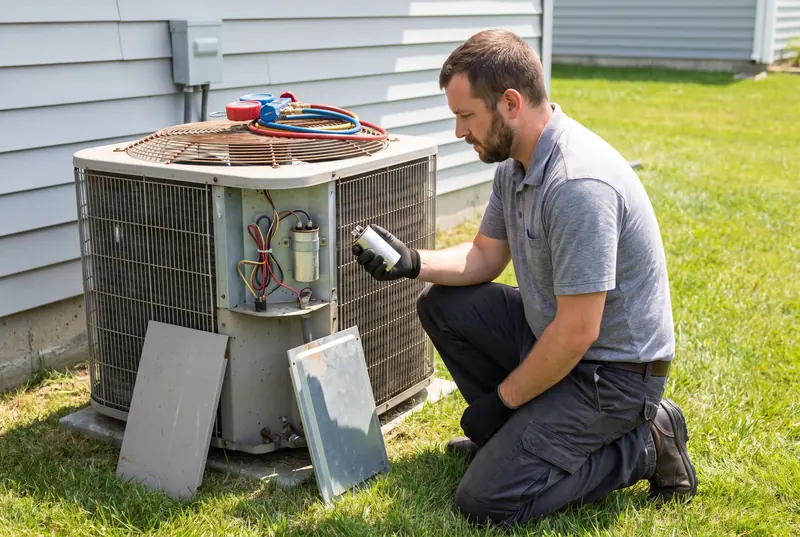
As the warmest months approach here in El Cajon, CA, our air conditioners become hard-working systems of our home comfort. They work tirelessly to keep our indoor spaces cool and comfortable. But like any mechanical system, air conditioners will eventually wear down and will eventually begin to show signs of wear and tear, indicating that a costly failure might be on the horizon. Catching these indicators promptly can save you from a hot and inconvenient situation on the hottest day of the year, and potentially avoid more extensive problems in the long run. Here at El Cajon HVAC, we want to help you understand what to look out for.
Reduced Cooling Performance: Feeling Less Cool Than Before?
One of the most common and immediate signs that your air conditioner is struggling is a noticeable decrease in its cooling capability. You might find yourself adjusting the thermostat lower and lower only to still feel warm or humid indoors. Perhaps certain rooms are much warmer than others. This isn't just about comfort; it indicates a problem within the system. Several factors could contribute to this issue. It could be a refrigerant leak, which means your system isn't able to absorb and release heat effectively. It's the critical component for heat exchange. Another common culprit is a dirty air filter, which restricts airflow and makes the unit work harder without achieving the desired cooling. Evaporator coils caked with grime can hinder performance, as they cannot efficiently transfer heat. The compressor itself, the engine of your AC, could be giving out. If you're experiencing inadequate cooling, it's time to have a professional from El Cajon HVAC diagnose the problem.
Strange Noises: What Are Those Unusual Sounds?
The sound of a properly functioning AC is usually a quiet, steady whir. If you start hearing unexpected auditory disturbances coming from your unit, it's a clear indicator that something is amiss. Grinding or squealing noises often point to issues with the motor bearings. These bearings, key to rotational movement, can wear down over time, leading to friction and eventual motor failure if not addressed. Clicking sounds, especially persistent ones, could indicate a failing relay or a problem with the electrical components. Loud banging or clunking is especially worrisome, as they might suggest a component that has come dislodged and is striking other parts. Don't delay in addressing these auditory warnings. Addressing these auditory clues promptly can prevent a small issue from becoming a costly repair.
Increased Energy Bills: Why Is My Electric Bill So High?
One of the most insidious signs of a failing air conditioner is a creeping increase in your energy bills. If your bills are increasing without a change in thermostat settings, your AC unit might be working harder than it should to achieve the same level of cooling. This inefficiency can be caused by a variety of factors. As mentioned, a clogged air filter reduces airflow, forcing the fan motor to work overtime. Leaky ducts can allow cooled air to escape into unconditioned spaces like your attic or crawl space, meaning your AC has to run longer to maintain the desired temperature. Units that are too old or not properly sized for your home are inherently less efficient. A lack of proper refrigerant makes the system strain. Over time, components like the compressor and fan motors can lose their efficiency. If you're noticing a significant uptick in your energy expenses without a clear explanation, it's worth having El Cajon HVAC inspect your AC unit to identify the source of the inefficiency. We can help you understand if a repair or a more efficient replacement makes sense.
Poor Airflow: Weak Air from Your Vents?
Good airflow is crucial for effective cooling and even temperature distribution throughout your home. If you notice that the air coming out of your vents is weak, or if some rooms have significantly less airflow than others, it's a strong indication of an underlying problem. Poor airflow can be attributed to multiple factors. A primary offender is a filter choked with dust and debris, which restricts the volume of air that can pass through your system. Obstructed return vents can impede the system's ability to pull air in. Beyond filters, issues with the fan motor itself can lead to reduced airflow. A struggling fan motor won't adequately circulate air through your home's ducts. Debris or even physical damage within the ductwork can also restrict air movement. Partially closed dampers can be the reason some rooms get less air. It's critical to resolve poor airflow to improve comfort and protect your AC from premature wear.
AC or Furnace Trouble in El Cajon?
Contact El Cajon HVAC now for fast, professional service and upfront pricing.
(619) 320-2795Excessive Moisture or Leaks: Is Your AC Leaking Water?
A little condensation is fine, but if you see puddles or a lot of wetness, there's an issue. This is a unmistakable indicator that something is wrong. Usually, water leaks are due to an obstructed condensate line. As your AC cools the air, it removes humidity, and this moisture collects in a drain pan and flows out through a condensate line. Algae, dirt, or debris can block this line, causing water to overflow the pan. Water damage and electrical hazards are possible consequences. Leaks can also originate from a cracked or rusted drain pan. If there's a major refrigerant leak, ice can build up on the coils, melt, and cause overflow. If you notice any unusual water accumulation around your AC unit, it's imperative to address it quickly to prevent further damage. El Cajon HVAC can diagnose the source of the leak and provide a lasting solution.
Frequent Cycling: Is Your AC Turning On and Off Too Often?
Your air conditioner should typically run in relatively consistent cycles, turning on to cool your home and then shutting off once the desired temperature is reached. If your AC starts turning on and off rapidly, a phenomenon called "short cycling," it's a serious indicator of a problem. Short cycling means your AC isn't completing a full cooling cycle, which is inefficient and puts undue stress on the system. There are various potential causes for this behavior. An oversized unit might short cycle because it cools the air too rapidly, then stops before it can remove humidity effectively. Often, short cycling is due to low refrigerant, a dirty filter, or a faulty thermostat. A struggling compressor or an electrical fault can also be culprits. Regardless of the cause, frequent short cycling wears down your AC components much faster, leading to premature breakdowns and increased energy consumption. If your AC is short cycling, it's not operating efficiently or effectively, and it needs professional attention.
Old Age: Considering the Age of Your System
The age of your AC unit, even if it seems fine, is a major predictor of future issues. A central AC system generally has a lifespan of 10 to 15 years, though some last longer with diligent care. An AC unit nearing or past its expected lifespan will be more prone to issues and less efficient. Older units often use outdated refrigerants like R-22, which are no longer manufactured and are becoming increasingly expensive to service due to supply limitations. Years of operation mean components in older systems are simply more fatigued. While regular maintenance can certainly extend the life of your AC, there comes a point where repairs become more frequent and costly than investing in a new, more efficient system. If your AC is over a decade old and showing symptoms, it's wise to consider replacement options. A new, energy-efficient model can offer significant savings on your utility bills and provide superior comfort for years to come.
Don't Wait for a Complete Breakdown
Recognizing these signs that your air conditioner is failing is the first step toward proactive home comfort management. Ignoring these warning signals can lead to a complete system breakdown at the worst possible time, often on the hottest day of the year. Beyond discomfort, emergency repairs often come with a higher price tag. If you're experiencing any of these issues with your air conditioning system in El Cajon, CA, don't hesitate to contact the experts at El Cajon HVAC. Our skilled technicians can diagnose the problem accurately, explain your options clearly, and provide the best solution for your home and budget. Whether it's a repair to extend the life of your current unit or a recommendation for a new, energy-efficient replacement, we're here to help you stay cool and comfortable. Reach out to us at (619) 320-2795 for your service appointment or inspection.
Need HVAC Help in El Cajon?
Call El Cajon HVAC now for fast, professional service and upfront pricing.
(619) 320-2795